A Hazard and Operability (HAZOP) study is a structured, systematic technique used to identify hazards and operability problems in industrial processes. While HAZOP was originally developed for chemical processing plants, it has evolved into several specialized forms to address different systems, technologies, and operational contexts.
Selecting the right type of HAZOP is critical. Over-studying wastes resources; under-studying leaves hidden risks. Mature organizations tailor the HAZOP approach to the system, lifecycle stage, and risk profile—often combining multiple HAZOP types to achieve comprehensive risk coverage.
Core HAZOP Types
Process HAZOP
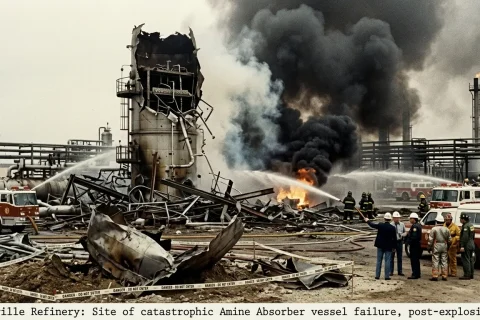
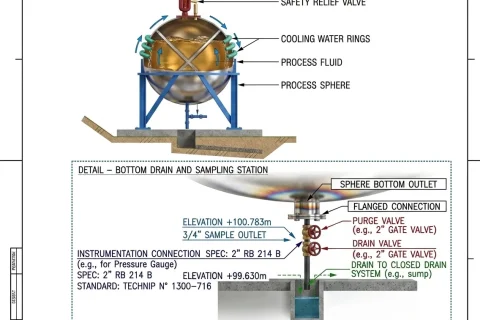
The most traditional and widely used form of HAZOP. It examines process design and operation using P&IDs, process data, and design intent. The study focuses on deviations in key parameters such as flow, pressure, temperature, and composition to identify hazards, operability issues, and safeguard gaps. This type is fundamental for refineries, petrochemical plants, fertilizer units, and offshore facilities.
Procedure HAZOP
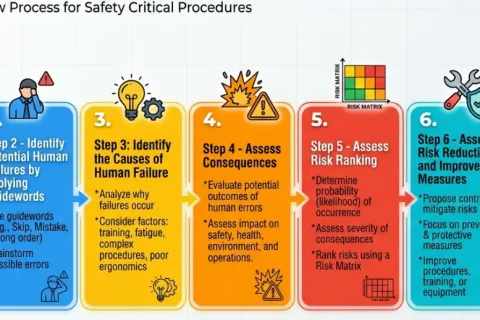
This type evaluates operating procedures rather than physical equipment. It focuses on how tasks are performed during start-up, shutdown, normal operation, maintenance, and emergencies. Procedure HAZOP is especially valuable where incidents are driven by incorrect sequences, missing steps, or unclear instructions rather than equipment failure.
Human HAZOP
Human HAZOP concentrates on risks arising from human behavior and decision-making. It examines factors such as workload, interface design, alarms, communication, and situational awareness. This type is critical in complex operations where human error can defeat otherwise robust engineering safeguards.
Software HAZOP
Software HAZOP applies the HAZOP philosophy to software-based systems. It identifies potential logic errors, incorrect assumptions, data handling failures, or cybersecurity vulnerabilities in control systems, safety systems, and digital platforms. It is increasingly important in highly automated plants and Industry 4.0 environments.
Specialized Technical HAZOPs
Control HAZOP (CHAZOP)
CHAZOP focuses on instrumentation and control systems, including DCS, PLCs, and SIS interfaces. It examines control loops, alarms, interlocks, failure modes, and control logic to ensure the system behaves safely under abnormal conditions. CHAZOP often supports or feeds into SIL assessment and functional safety studies.
Electrical HAZOP (EHAZOP / SAFOP)
Electrical HAZOP, sometimes referred to as a Safe Operability Review (SAFOP), evaluates electrical power systems. It addresses issues such as power availability, redundancy, failure consequences, blackouts, load shedding, and the impact of electrical faults on process safety and operability.
HAZOP / SIL (Integrated HAZOP-LOPA-SIL)
This hybrid approach integrates traditional HAZOP with Safety Integrity Level (SIL) determination. Identified hazardous scenarios are screened for the need for Safety Instrumented Functions (SIFs), and their required risk reduction is defined. This approach improves efficiency and ensures a strong link between hazard identification and functional safety compliance.
Contextual and Operational Variations
Continuous Operations HAZOP
Applied to plants that operate continuously for long periods, such as refineries and petrochemical units. The focus is on steady-state deviations, long-term degradation, and loss of containment scenarios during normal running conditions.
Batch Operations HAZOP
Used for batch or semi-batch processes where operations change over time. It accounts for time-dependent hazards, sequencing issues, and transitions between steps. Specialized guide words related to timing, order, and duration are commonly applied.
Delta or Change HAZOP (MOC HAZOP)
A focused HAZOP conducted when changes are introduced to an existing system. Instead of reviewing the entire design, the study examines only what has changed—equipment, operating conditions, materials, or procedures. Delta HAZOP is a key element of effective Management of Change (MOC) systems.

Certified Functional Safety Professional (FSP, TÜV SÜD Germany), Certified HAZOP & PHA Facilitator, LOPA Practitioner, QRA/FERA and Specialist in SIL Verification & Functional Safety Lifecycle, with 18 years of professional experience in Plant Process Safety across Petroleum Refining and Fertilizer Complexes.