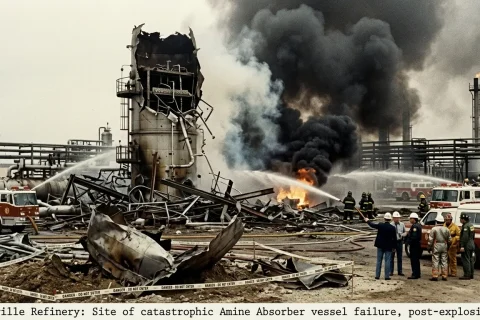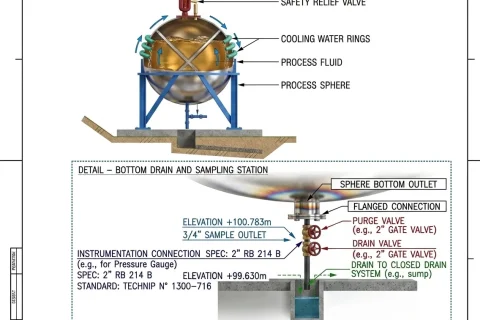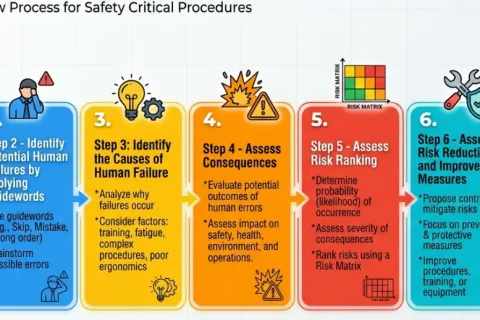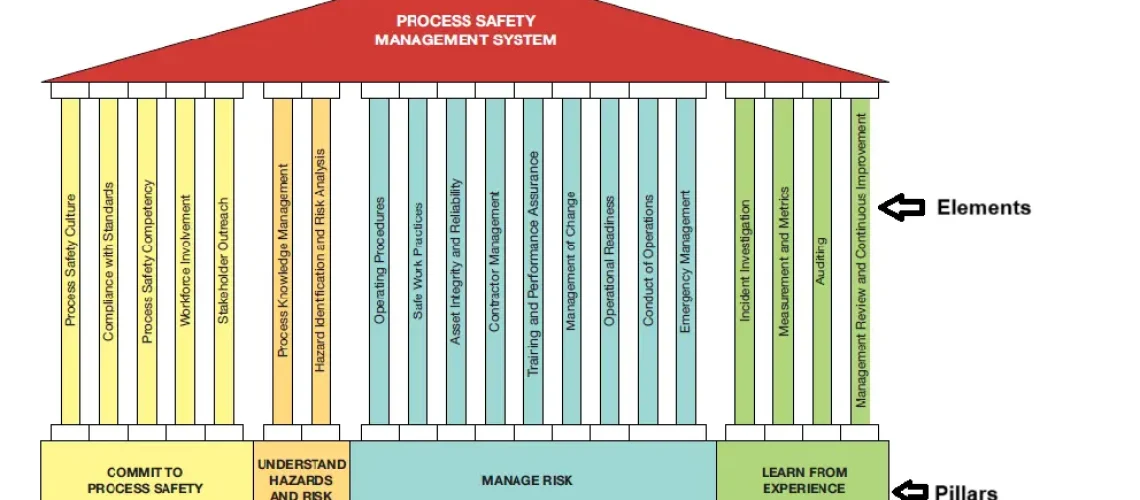
Risk Based Process Safety Management System is a modern framework designed by CCPS to refocus attention where it matters most. RBPS acknowledges that not all hazards carry the same weight, and that achieving genuine process safety excellence demands smarter prioritization, stronger culture, and performance-driven safety systems. By shifting from a compliance mindset to a risk-focused approach, RBPS guides companies toward more resilient, efficient, and accountable process safety management.
This the Summary table of CCPS Risk Based Process Safety Management System, with short description of each element.

|
PILLAR |
ELEMENT |
DESCRIPTION |
| 1. COMMIT TO PROCESS SAFETY | 1. Process Safety Culture | Builds shared values and behaviors that keep process safety a core priority. Encourages strong leadership, accountability, open communication, learning, and consistent safe behavior. |
| 2. Compliance with Standards | Ensures compliance with all required laws, regulations, codes, and internal standards. Maintains accessible information and consistent application to support safe and legally sound operations. | |
| 3. Process Safety Competency | Develops and maintains knowledge, skills, and experience needed for safe operations. Supports continuous learning, knowledge sharing, and proper application in the field. | |
| 4. Workforce Involvement | Engages employees at all levels in hazard reviews, safety improvement activities, and decision-making. Workforce input strengthens reliability and promotes ownership. | |
| 5. Stakeholder Outreach | Communicates with regulators, communities, and emergency services. Builds trust, transparency, and shared understanding about process risks and safety performance. | |
| 2. UNDERSTAND HAZARDS & RISK | 6. Process Knowledge Management | Ensures accurate documentation of chemical, equipment, and process information. Supports safe design, troubleshooting, training, and emergency response with updated and controlled data. |
| 7. Hazard Identification & Risk Analysis (HIRA) | Uses structured tools (HAZOP, LOPA, QRA) to identify hazards, understand risks, and evaluate safeguards. Helps prioritize actions to keep risks within acceptable limits. | |
|
3. MANAGE RISK |
8. Operating Procedures | Provides clear instructions for normal, abnormal, and emergency operations. Supports consistent task execution, reduces human error, and keeps operations within safe limits. |
| 9. Safe Work Practices | Controls hazards during non-routine work (hot work, confined space, line breaking, maintenance). Uses permits, authorizations, and training to ensure safe job execution. | |
| 10. Asset Integrity & Reliability | Ensures equipment remains fit for service through proper design, installation, maintenance, testing, and inspection. Prevents failures that could lead to releases, fires, or explosions. | |
| 11. Contractor Management | Ensures contractors understand site hazards, follow safety rules, and perform work safely. Includes selection, training, monitoring, and performance evaluation. | |
| 12. Training & Performance Assurance | Ensures personnel have required skills and verifies they can perform tasks safely. Includes training programs, competency assessments, and refresher programs. | |
| 13. Management of Change (MOC) | Reviews and approves changes before implementation to prevent introducing new risks. Covers technical, procedural, and organizational changes. | |
| 14. Operational Readiness | Confirms that all conditions are safe before startup or return to service. Verifies equipment readiness, updated procedures, training, and functional safeguards. | |
| 15. Conduct of Operations | Promotes disciplined, consistent, and structured day-to-day operations. Enhances communication, shift handover quality, and adherence to procedures. | |
| 16. Emergency Management | Prepares the organization to respond effectively to incidents. Includes emergency planning, drills, coordination with external responders, and recovery steps. | |
| 4. LEARN FROM EXPERIENCE | 17. Incident Investigation | Investigates incidents and near misses to identify root causes, develop recommendations, and ensure lessons are shared and applied. Focuses on learning rather than blaming. |
| 18. Measurement & Metrics | Uses leading and lagging indicators to monitor process safety performance. Helps detect weaknesses early and track effectiveness of controls. | |
| 19. Auditing | Evaluates whether process safety systems are functioning as intended. Identifies gaps, verifies compliance, and drives improvement through corrective actions. | |
| 20. Management Review & Continuous Improvement | Senior leadership reviews safety performance, major risks, and audit results. Ensures system strengthening, resource allocation, and long-term improvement. |
Reference:
CCPS Guidelines for Risk Based Process Safety

Certified Functional Safety Professional (FSP, TÜV SÜD Germany), Certified HAZOP & PHA Facilitator, LOPA Practitioner, QRA/FERA and Specialist in SIL Verification & Functional Safety Lifecycle, with 18 years of professional experience in Plant Process Safety across Petroleum Refining and Fertilizer Complexes.