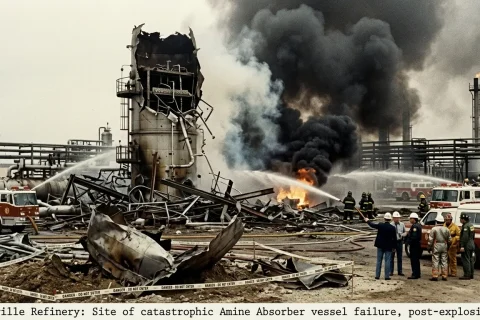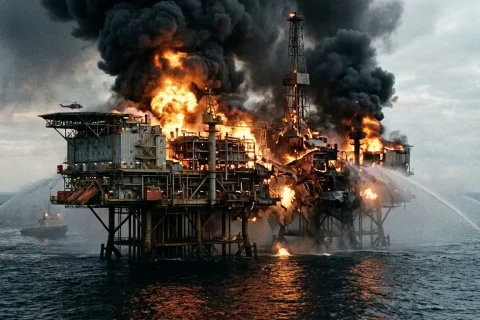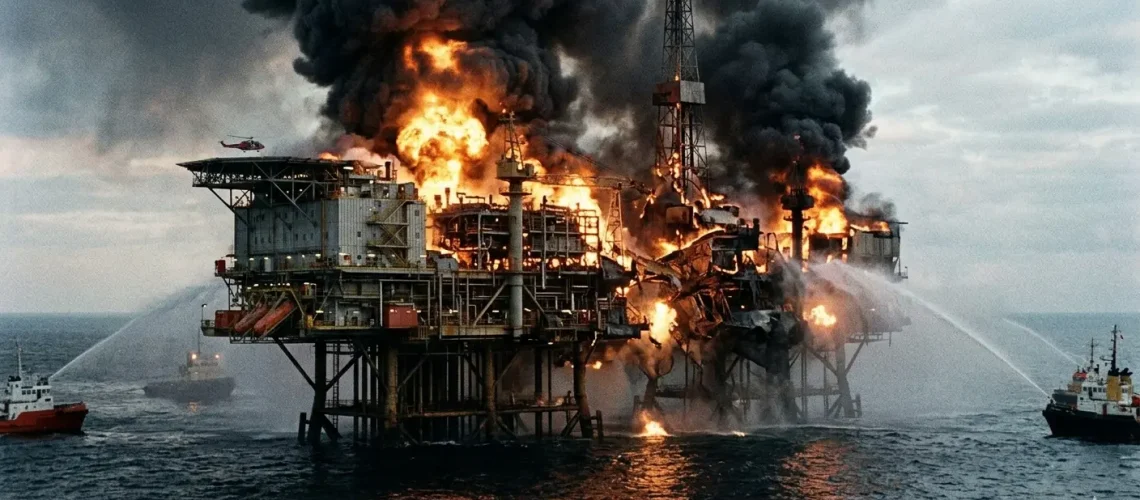
On July 6, 1988, an explosion and fire occurred on the Piper Alpha platform in the North Sea when a standby condensate pump, which had its pressure safety valve removed for maintenance, was improperly re-energized. Gas condensate leaked from the blind flange assembly, ignited, and caused a fatal explosion. The incident quickly escalated as high-pressure gas lines ruptured, creating a major fire that blocked evacuation routes and resulted in 167 fatalities. The world’s biggest offshore oil disaster affected 10% of UK oil production and led to financial losses of an estimated US$ 2.4 billion.
Incident Description
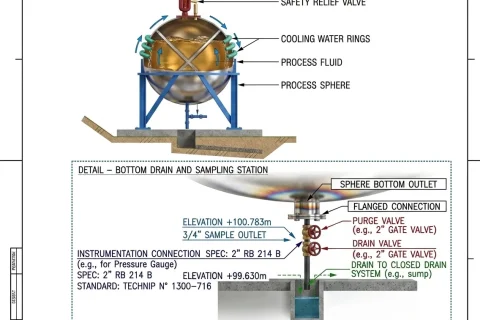
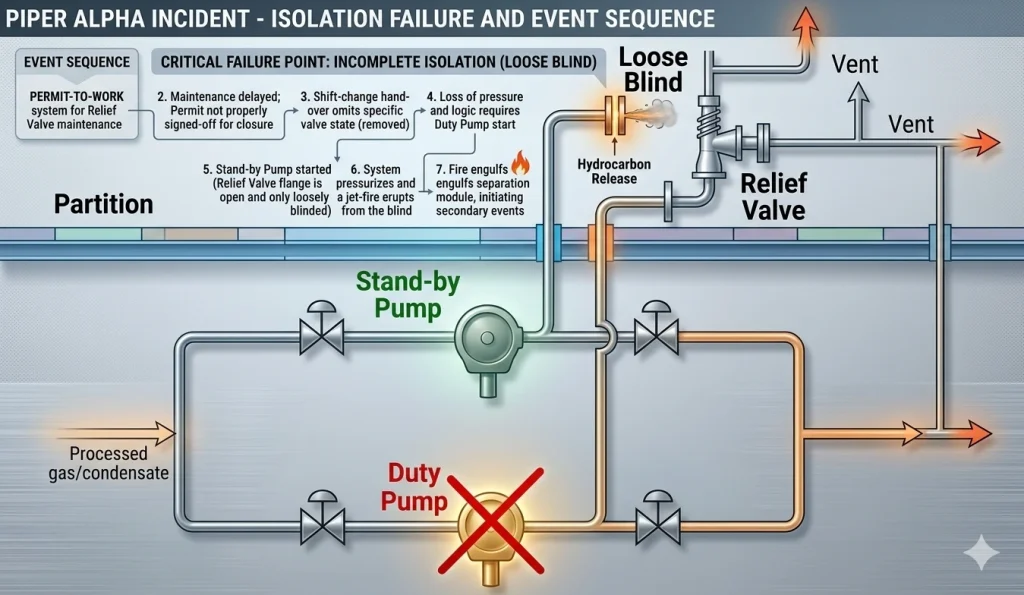
A standby condensate pump for reinjecting gas condensate into an oil export line on the Piper (Alpha) platform had been de-energised for maintenance. Its discharge pressure safety valve (PSV) was also removed and blind flange assemblies were fitted to the open PSV pipe connections.
Meanwhile, the running condensate pump failed and would not restart. Liquid levels in the gas/liquid separation system were rising and would eventually trigger a total shutdown of the platform if not reversed. Night shift operators were aware the standby pump had been taken out of service for maintenance by the day shift but believed the work had not yet begun, so they decided to re-energise and start the standby pump.
Gas condensate leaked from a PSV blind flange assembly; it found an ignition source and exploded. The explosion was soon followed by an oil pipe rupture and pool fire. The incident escalated rapidly as high pressure gas lines ruptured after 20, 50 and 80 mins, respectively, creating a towering inferno. Smoke and flames outside the accommodation module made evacuation by helicopter or lifeboat impossible.
Incident Analysis
Basic cause (most probable) was a loss of primary containment (LOPC) of hydrocarbon condensate due to overpressure of a temporary blind flange assembly after a pump undergoing maintenance was started in error.
Critical Factors
- The platform was originally designed to produce and export oil only but was extensively modified to also enable export of gas.
- Gas compression and condensate reinjection facilities were retrofitted beneath the control room, electrical utility and accommodation modules.
- Absence of fire protection for structural steel and gas risers.
- Continued operation of inter-connected oil production platforms after the first explosion.
Root Causes
- Inadequate control of work (work permit systems)
- Poor communication (shift handover and inter-platform),
- Inadequate management of change (retrofitting a gas treatment system on a congested platform)
- Inadequate protection (absence of automatic shutoff valves and dedicated deluge systems for gas risers)
- Poor emergency preparedness (failure to conduct evacuation drills and to depressure the subsea pipelines),
- Inadequate leadership (personal safety prioritised over process safety
Lessons Learned
- Offshore safety legislation should be goal-setting rather than rule-based to foster innovation and continuous improvement in installation integrity
- Owner/operators of fixed and mobile offshore installations should submit a Safety Case document to the regulator detailing how major accident risks and safe evacuation, escape and rescue of personnel are managed,
- Production platforms should be provided with fire and gas detection systems, explosion protection and active (water deluge) and passive (insulation) fire protection systems
- Production platforms should have temporary safe refuges (TSRs) which protect personnel from external fire and smoke while an emergency is assessed and/or preparations are made for evacuation
- Evacuation drills should be routinely practised
Key Takeaways for HAZOP Studies
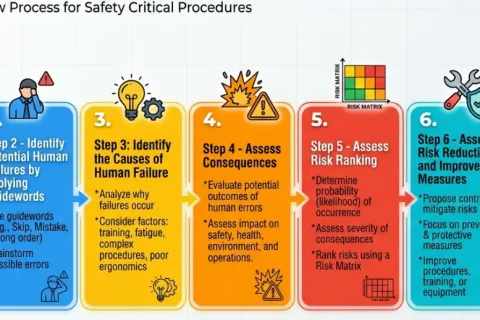
The Piper Alpha disaster highlights several important lessons for HAZOP teams:
- Evaluate maintenance scenarios – Critical safety devices may be unavailable during maintenance, creating risks that do not exist during normal operation.
- Assess temporary modifications – Temporary blinds, bypasses, and other short-term changes should be treated as potential hazards.
- Consider human and communication failures – Inadequate shift handovers and permit-to-work breakdowns can become initiating causes of major accidents.
- Focus on loss of containment events – Hydrocarbon leaks, equipment failures, and improper isolation should be thoroughly examined during HAZOP reviews.
- Analyze escalation and domino effects – A small incident can rapidly propagate to adjacent systems, leading to catastrophic consequences.
- Verify the effectiveness of safeguards – Safety systems, emergency shutdowns, and fire protection measures must remain functional under abnormal conditions.
HAZOP Lesson: Piper Alpha demonstrates that maintenance activities, communication failures, and degraded safeguards can combine to create a major accident. HAZOP teams should therefore challenge assumptions about equipment availability and ensure that abnormal operating conditions are adequately addressed.
Top References
- https://jpt.spe.org
- Learning Lessons from Major Accidents by IChemE
- https://www.thechemicalengineer.com

Certified Functional Safety Professional (FSP, TÜV SÜD Germany), Certified HAZOP & PHA Facilitator, LOPA Practitioner, QRA/FERA and Specialist in SIL Verification & Functional Safety Lifecycle, with 18 years of professional experience in Plant Process Safety across Petroleum Refining and Fertilizer Complexes.